Should You Even Go to the US? A Contrarian Take

Should You Even Go to the US? A Contrarian Take
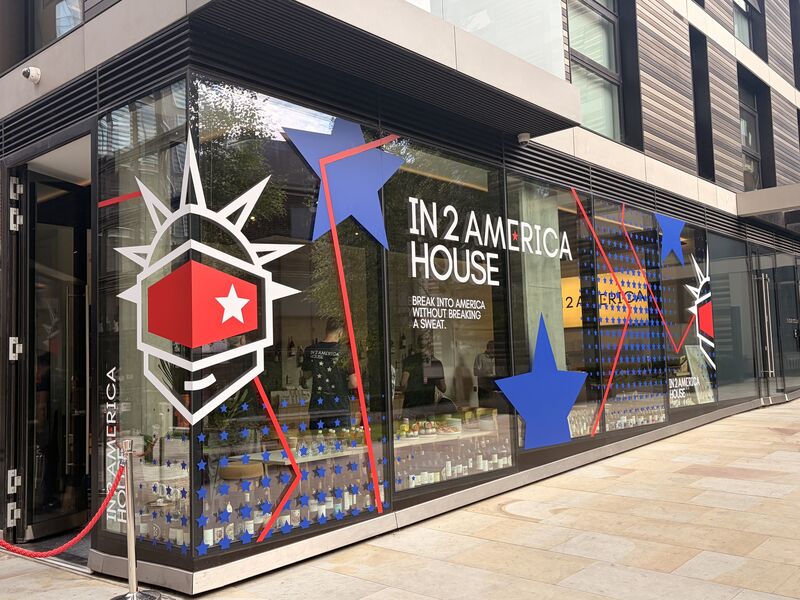
Every founder has the U.S. at the top of their expansion list. Our second panel at In2America House opened by asking whether most of them should go at all.
Chaired by Rohan Basu, COO of Wise, it brought together Samantha Krezek, chief of staff at VividQ, who led that company’s U.S. incorporation; Damon Ambrosini of BDO, who advises on U.S. connectivity; and Fred Schmidt of Capital Factory in Austin, a forty-year veteran of building businesses across the Atlantic.
The unfair advantage test
Sam offered the hot take the rest of the hour circled back to. The real question is not when to expand but whether. “You should not expand to the U.S. unless you’re pretty sure you have an unfair advantage,” she said. The market that looks like pure demand is also full of well-capitalised homegrown companies who know it better than you do.
The market that looks like demand is also full of competitors who know it better than you.
VividQ went because it had a genuine edge, a holographic display technology whose only serious competitor was fifteen years from market. The playbook did not transfer either. Its Japanese expansion was a marriage made in heaven, and the approach that worked there did not translate to American business culture at all.
It doesn’t have to be the coasts
Fred argued hard against coastal romance. New York he called a vicious ecosystem where nobody wants to meet you. Silicon Valley he described as incestuous, where “the deals are done by the bros around the pool.” Texas, by contrast, welcomes you: “You say, hi, I’m from the UK, and they say, welcome, tell us what you do.” Texas is the eighth largest economy in the world in its own right, with no state corporate or personal income tax.
Money is the easy part
He was just as pointed on fundraising. “It’s not about chasing the money,” he said. “Do you have a real business? Find some revenue.” His counsel was to build something sustainable, take patient capital from people who understand what you do, and hold off the wilder venture money as long as you can. “Getting into bed with an investor is a marriage,” and once the honeymoon ends, misaligned expectations can cost a founder their company.
Sam sharpened the culture gap. U.S. investors operate on a power law and move on warm intros; her UK investors wanted governance. “Their board meeting is an ex-operator in a Starbucks,” she said. “Yours is twenty-three pages of board materials for ex-McKinsey people.” Her verdict on investor fit was the line of the morning: “I wish VC divorces were a thing.”
Wait on the structure
On the technical questions, the advice was to wait. Damon likened a U.S. topco to a roach motel: “once you enter that, you actually can’t get out of it.” Add one before you need it and you saddle a non-U.S. business with reporting, liabilities and, in several cases the panel had seen, a lower sale price when a UK buyer balks at the tax mess. His rule is to add a topco at the last possible moment, usually when an investor at Series A will pay to set it up.
Fred’s variation was to point founders towards professional employer organisations as a way into the market without incorporating in every state, a structure he named In2America as an example of.
What you need before you book a flight
The rapid-fire close asked what a company needs before it leaves:
● Fred: customers and revenue. Without them you don’t have a business yet.
● Damon: a flexible plan, and the discipline to ask an investor why they really need that topco.
● Sam: contacts. A warm network already on the ground, because there is no excuse to arrive cold.
London, as Fred put it, is one of the most capable capitals in the world for this advice, much of it founder-friendly and free. Both he and Sam singled out London & Partners.
Worth With In2America
The money is the easy part. What decides whether an expansion works is the quality of the advice around it and the honesty of the question you ask before leaving. In2America is built for exactly that moment, helping international companies test the decision, get the structure right, and land in the U.S. without the expensive mistakes. If you are weighing the U.S., talk to us first.