The CFO’s View: How to Enter the US Without Sleepwalking Into Liability

The CFO’s View: How to Enter the US Without Sleepwalking Into Liability
Most U.S. expansion advice is about ambition. A CFO’s job is to survive it.
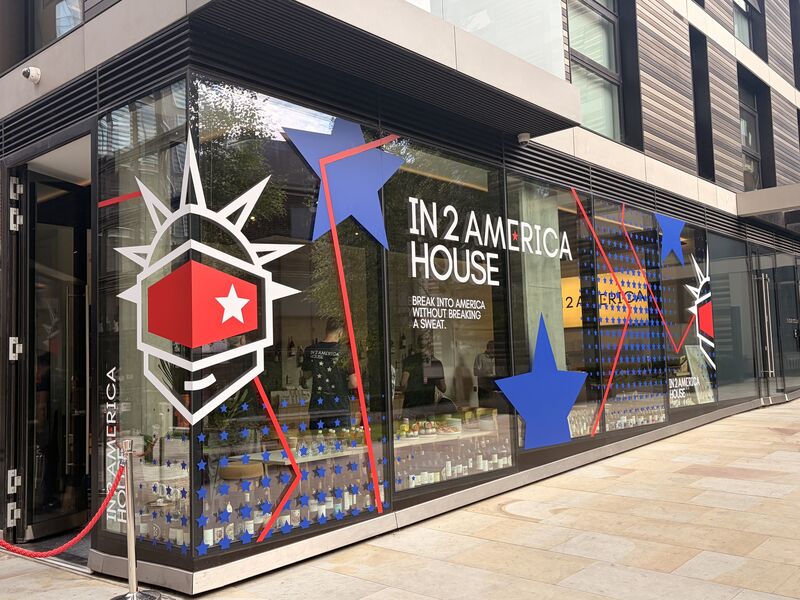
Chaired by Gus Franklyn-Bute from the US Embassy in London, this panel at In2America House looked at expansion through the eyes of the CFO, with three practitioners in the room: our own co-founder and CFO Ed Shropshire; Michael Holland, a US and UK qualified tax partner at Blick Rothenberg; and Amanda Brill, Founder & Managing Attorney at Brill Immigration.
It’s a team game
Michael set the frame early. “In the UK you have one accountant who plays all positions,” he said. “In the U.S. it’s a team game. You need a right back and a left back, a striker and a goalkeeper.” Each part of an expansion needs its own specialist, and the value of advisors who understand both sides is that they can tell you when the best U.S. answer is a poor UK one.
Talk yourself out of it first
The first job of all three was to talk founders out of going too early. Ed’s test is whether the market is pulling: are U.S. clients finding you, and have you found product-market fit at home. “Trying to do that in two separate markets at the same time is a surefire way to fail at both.” Michael turns away the founders who want the U.S. because it is the U.S., and separately the ones who ask for a U.S. entity when all they actually need is to sell to U.S. customers, which they can often do from the UK under treaty protection.
Immigration punishes improvisation
Immigration is where good intentions do the most damage. There are roughly eighteen thousand U.S. immigration lawyers and perhaps fifty in the UK, and the traps are unforgiving. Founders treat an ESTA as a working visa and get caught. “Officers see you were in the U.S. for sixty days,” Amanda said. “My meetings last two hours max. How do you have a sixty-day meeting?” The routes that actually work each carry conditions that reward planning:
● O, E and L visas are the usual options, each with its own qualifying tests
● An L-1 still requires a physical office under rules written in the seventies, so you pay rent for a space you cannot yet work in
● Corporate registration alone can take around eight months
The quiet tax mistakes
The financial mistakes are quieter and more expensive. Spend too much time in the States signing contracts and holding yourself out as the CEO, and you can create a permanent establishment without trying, dragging a valuable UK company into the U.S. tax system.
Michael’s answer was to build reversibility into every early decision, and Ed made the same point from the employer’s side: there are ways to hire, employ staff and establish a market presence while keeping fixed costs relatively low until the business proves itself. “Be really hot on how much cash runway you have,” Ed said. Most expansions fail because the business runs out of capital before the investment starts generating returns, so building in flexibility to the operating model is therefore critical.
Fifty states, fifty rulebooks
“Founders look at the U.S. as one country,” Michael said. “They would never look at the EU as one country.” Different tax rates, different employment law, different rules on many areas of the hiring process, for example what you can ask in an interview, the checks you can conduct on candidates and whether you must publish salary and benefits on an advert. Ed described a client with a single salesperson across six states, each on a different employment agreement with different non-compete restrictions.
The upside founders miss
The federal system makes entry hard, but states, counties and cities compete hard to bring you in, with grants and incentives most founders never look for. Ed pointed to a state match fund worth twelve million dollars that most companies in the room had never heard of.
The advice they all agreed on
Ed’s parting advice was to make the forecast model hold up to U.S. friction rather than running a European P&L in dollars. Too often, US expansion costs get buried within group forecasts, making it difficult to understand whether the expansion itself is working. Build in:
● Higher U.S. employment costs
● Longer sales cycles and higher marketing spend
● U.S. travel
● A realistic U.S. revenue ramp
● Twelve to twenty-four months of cash runway
Michael’s was simpler still. “Don’t bury your head in the sand. Almost every advisor will give you time for free” to tell you what the real problems are before you hire them to fix them. Amanda closed on a reassuring note: their current approval rate is close to 99 per cent. The cases get approved, the founders get in, and the businesses grow once they are there.
Work with In2America
None of these decisions should be made alone, or made late. In2America is the only PEO built specifically for international companies expanding into the U.S. We handle employment, payroll, compliance, benefits and visa support, and we bring the right advisors around you before the mistakes are made. If the U.S. is on your plan, start the conversation early. Talk to us.