Why The First US Hire Breaks So Many Companies

Why The First US Hire Breaks So Many Companies
Around 5,000 international companies expand into the U.S. every year, and most try to hire within the first twelve months. Roughly half of those first hires fail or churn inside 18 months, and the highest failure rate is in sales.
The hire isn’t the problem. The timing is.
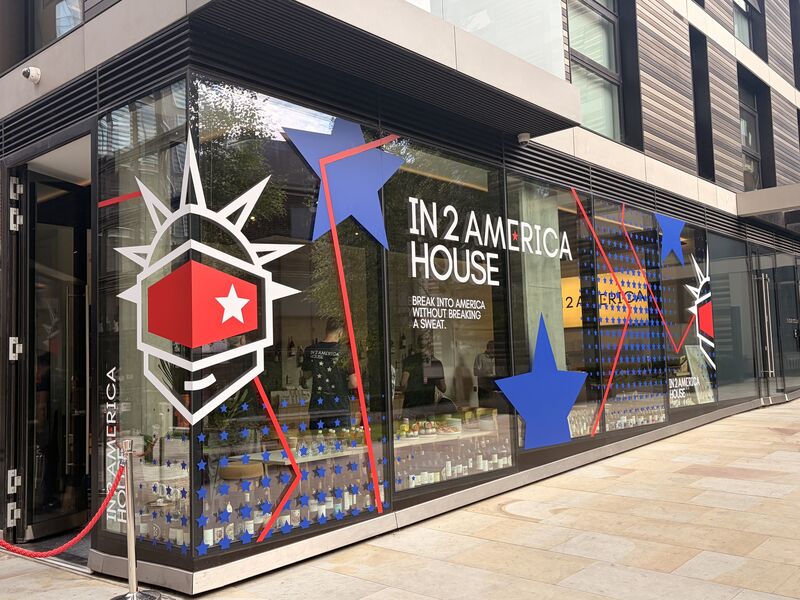
That was the backdrop to our opening panel of the week at In2America House, chaired by Harry Davis of Gather, with Dan Illes (Atomico), Leah Sutton (Balderton Capital) and Ben Newsome (Cherry Ventures). All three advise founders on exactly this decision, and all three said the same thing: the instinct to reach for the most impressive salesperson money can buy is usually wrong.
Not the impressive sales leader
Leah was blunt about where it goes wrong. “The number one failure I see is that first sales leader” she said, able to name five examples off the top of her head. The trouble is that Americans, in her words, “can sell anything to anyone,” which is precisely the skill that makes a bad hire hard to spot in an interview.
The polished senior hire usually came from a machine that generated their leads. Drop them into an early-stage business with none of that in place and they drown, because the fundamentals aren’t there:
● No product-market fit in the U.S. yet
● No pipeline to work
● No localised messaging
● No brand recognition
Seniority is a mindset, not a title
Ben made it a principle. “Seniority first on the ground is a hustler” he said. Title and Rolodex matter in genuinely complex enterprise or government sales, but for most companies the first hire should skew less experienced and more generalist: a zero-to-one builder who can operate without a playbook.
Over-hiring is the more expensive and more common failure. “It’s going to take six months to hire, they start to ramp, and by the time you’ve made the decision you’ve lost at least a year in market,” Ben said.
The hidden tax of getting it wrong
Bring in one expensive U.S. hire on two or three times the comp of your best-paid European employee and everyone at home notices. Benchmarking conversations start, salaries drift up across the company, and if the hire then fails you are left more expensive everywhere and no larger anywhere. Failing publicly in the U.S. also damages your employer brand back home, because the best European talent believes the momentum is always towards America.
When are you actually ready?
Dan’s marker is simple: “the point at which you’re on a plane more than you’re not.” Until then the pull can be served with travel. The question the panel kept returning to was whether the business is being pulled by real demand or pushed by ambition, and only the first justifies boots on the ground. The sequence that works looks like this:
● Founder-led sales first
● Market validation, over three to six months
● Messaging iterated for the U.S. buyer
● Pipeline created
● Then hire to scale what already works
The costs that make founders choke
The costs that catch people out are rarely the salaries. “Founders start to see the cost of U.S. health benefits and they choke,” Leah said. “It’s absolutely astronomical.” Then there is the machinery of fifty states with different tax rules, employment laws, firing laws and pay-transparency rules. Harry offered a cautionary tale of a founder who overstayed on the wrong immigration status, spent two nights in a cell, and could not expand for another two years.
Location is a time-zone decision
Leah lived in California for twenty years and still remembers the cost: meetings at half past six every morning, European teammates who left because they had not had dinner with their families in two years. “Time zones are real,” she said. “You can’t hack a time zone.” The East Coast, Chicago or Austin usually serve a European operation better than the glamour of San Francisco.
Brand is the quiet disadvantage
Everyone in London knows Revolut. The average person in the U.S. has never heard of it. A twenty-five person startup arriving to a hot, competitive market where nobody knows its name has to compete on the one thing it can offer: the chance to build something from the ground up. That is why the panel pushed founders towards their investors’ U.S. networks, and why Cherry looks for a U.S. investor on the cap table by Series A, less for the cheque than for the distribution.
Get the first hire right
The first U.S. person is not just a salesperson. They are the cultural anchor for everything you build in the market, which is why the panel urged founders to have them spend real time with the team at home first.
This is the stage we are built for. In2America is the only PEO built specifically for international companies expanding into the U.S., and we focus on the most fragile part of the journey: hire #1 to hire #10. We help you hire at the right time, in the right way, with the right structure in place. If you are planning your first U.S. hire, talk to us before you make it.